
Child psychology consultations offer significant benefits, both in preventing future difficulties and in addressing existing problems. Children also experience emotional distress: stress, fears, sadness, behavioural difficulties or learning difficulties that, if not addressed early, can affect their development, self-esteem and wellbeing.
At Centre )Eines(, we support children and families through an integrative approach that combines a neuropsychological perspective with an understanding of the child’s inner world and family context. The family plays an active role in the process: we work with the child in sessions while also offering parents guidance and support to help changes take root in everyday life.
Our child psychologist in Barcelona develops an individualised intervention plan that takes into account the child’s motivation, developmental stage, and family and school environment. Depending on the needs of the process, support may involve working directly with the child, providing guidance to parents, or combining both approaches.
We help children understand and manage their emotions using tools adapted to their age.
Parents receive guidance and practical strategies to support the process at home.
When necessary, we work with the school to ensure a consistent approach.
We integrate EMDR, systemic and neuropsychological approaches, tailoring them to each child’s profile.
Every child’s therapeutic process is unique. We always adapt it to the child, their age, developmental stage and family’s needs.
During the first session, we gather information about the child, their history, family and school environment, and the reasons for seeking support. In many cases, the first session is with the parents only. We then establish the goals of the therapeutic process.
We design a therapeutic plan tailored to the child’s profile and age. This may include working directly with the child, parent guidance sessions, EMDR where appropriate, or coordination with the school.
Throughout the process, we keep the family informed about the child’s progress and development. The frequency of sessions is based on the therapeutic goals and adjusted as the process evolves.
If your child consistently shows any of these signs, it may be time to consult a child psychologist in Barcelona. Remember: early intervention is the best way to prevent difficulties from becoming established.
If you are unsure whether your child needs to see a child psychologist in Barcelona, get in touch with no obligation. If needed, we can offer guidance before you book an appointment to help you make the best decision for your family.
When looking for a child psychologist in Barcelona, you need someone who has specialist training, knows how to connect with your child and can support your family throughout the process.
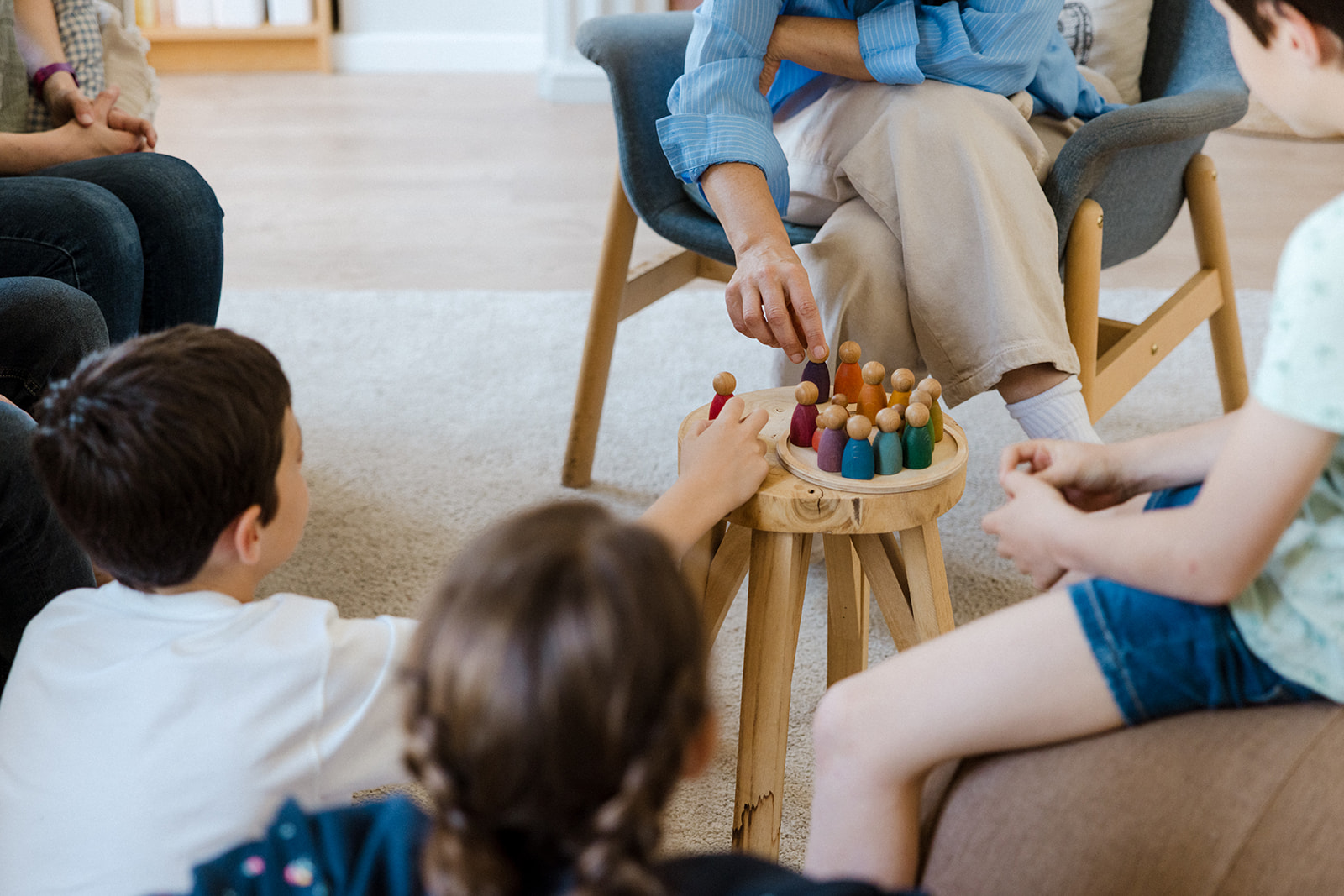
We make child psychotherapy accessible and age-appropriate: through play, drawing, stories and expressive activities, we create a space where children can explore their emotions and develop their own coping resources.
We also offer psychological assessment and support for children with neurodivergent profiles, including ADHD, autism and giftedness. Our integrative approach avoids viewing differences solely as problems, prioritises each child’s strengths, and provides practical strategies for both the family and the school environment.

Children can start seeing a psychologist from the age of 3–4. For younger children, support is mainly provided through the parents: the psychologist offers guidance and support to the family rather than working directly with the child.
It may be time to seek professional advice if your child experiences intense anxiety, persistent fears, frequent and disproportionate tantrums, difficulty interacting with other children, a decline in school performance, persistent sadness, or behavioural changes that last more than two or three weeks and affect their daily life.
A child psychologist works with children through play, drawing and other age-appropriate activities that allow them to express their emotions naturally. They also provide guidance sessions for parents to help them better support their child at home.
Yes. Parental involvement is essential in child psychology. Depending on the child’s age and the stage of therapy, sessions may involve working directly with the child, meeting with the parents only, or a combination of both.
During the initial assessment session, we advise parents on the recommended frequency of sessions and the estimated duration of therapy based on their child’s needs.